You’ve outgrown your ute. The loads keep getting heavier, the jobs keep getting bigger, and that dual-cab you’ve relied on for years is groaning under weights it was never meant to handle. Maybe you’re a landscaper who’s moved from residential gardens to commercial contracts. Maybe you’re a builder whose tools have multiplied until the tray looks like a game of Tetris gone sideways. Whatever’s driving it, you’re staring at your current payload thinking you need double that. Maybe triple.
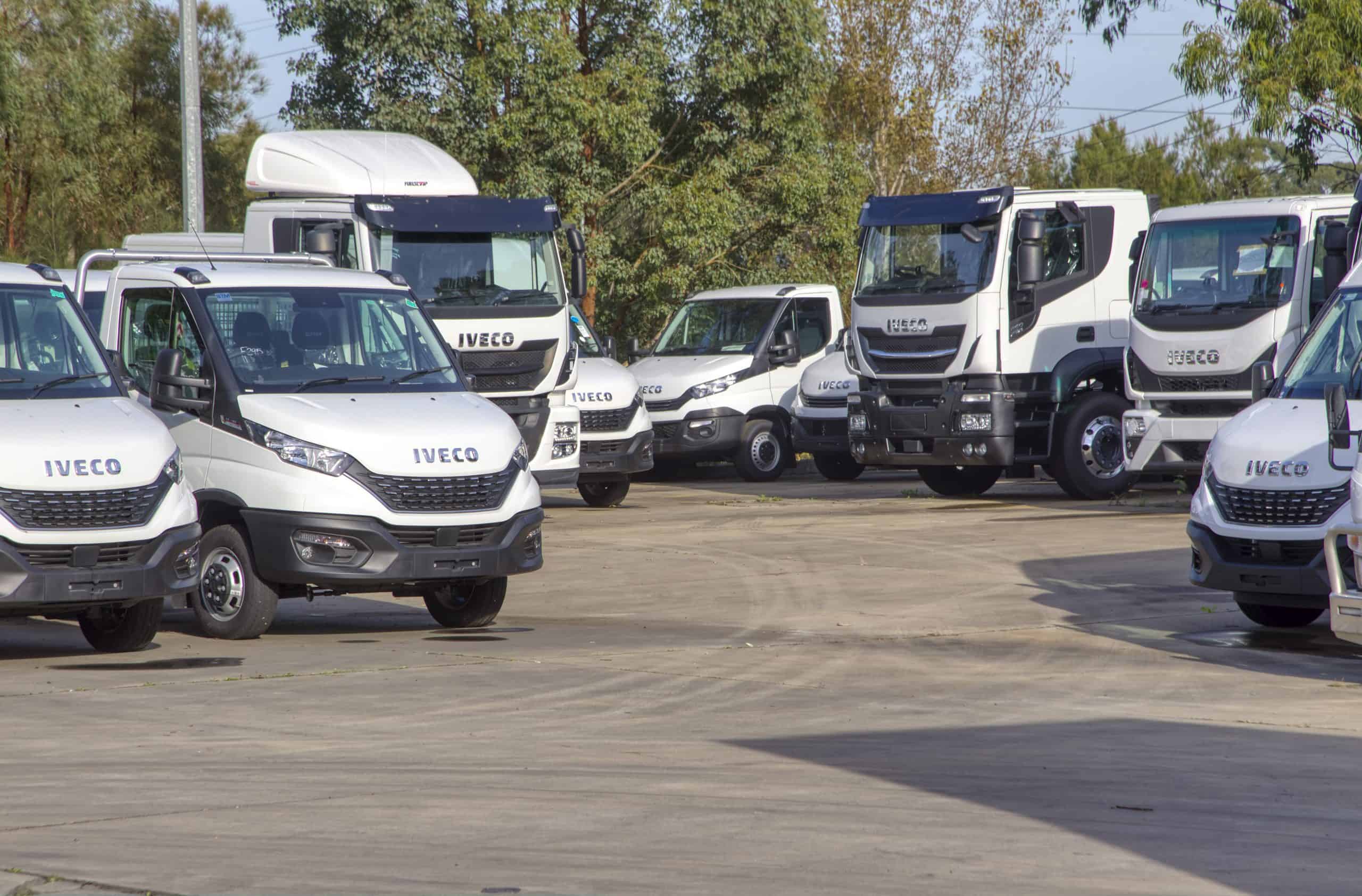
So you start looking at actual trucks. Pretty quickly, you’re comparing the Iveco Daily to the Eurocargo, wondering which makes sense. They’re different weight classes. Daily tops out at 7.2 tonnes GVM while Eurocargo starts at 12. Yet they somehow overlap in every buyer’s mind. It doesn’t help that both wear the Iveco badge and sit in the same showrooms.
This guide covers the engineering differences that affect how these trucks drive, licensing requirements that catch people out, payload calculations that reflect reality, and what ownership actually costs. Real decisions, not brochure comparisons.
STM Trucks & Machinery has been walking NSW businesses through this decision for over fifty years across our Smeaton Grange, Queanbeyan, and Unanderra locations. We’ve watched tradies buy too much truck and regret it. Watched landscapers buy too little and outgrow it in eighteen months. Both mistakes hurt.
Disclaimer: Vehicle specifications, pricing, regulations, and licensing requirements change regularly. Everything here reflects our understanding of the 2025 conditions. Always verify current details with Transport for NSW, your Iveco dealer, and relevant professionals before making decisions. Individual circumstances vary significantly.
Power Your Business with STM Trucks & Machinery
Whatever the size of your business, our experienced sales team will help you get the best from your budget.
What Separates a Light Truck from a Medium-Duty Workhorse
Understanding the Fundamental Design Differences
The Daily started as a van platform that Iveco stretched out, beefed up, and fitted with a proper truck chassis. That van heritage shows in how it drives. You sit in a normal driving position. Controls feel familiar. Entry height is manageable, so you’re stepping in rather than climbing. New drivers adapt quickly.
The Eurocargo is a purpose-built truck from the ground up. Heavier chassis rails are designed to withstand loads that would fold a light truck in half. You’re climbing up into the cab, not stepping in. The floor sits noticeably higher. You know immediately you’re operating serious equipment.
Where Each Platform Fits in the Iveco Lineup
Nothing from Iveco sits between Daily’s 7.2 tonne ceiling and Eurocargo’s 12 tonne floor. That gap is deliberate. It marks where “van we’ve made tougher” ends and “purpose-built medium truck” begins.
If you consistently need more than about 4 tonnes of payload, you’re in Eurocargo territory. Genuinely under 3 tonnes most days? Daily makes more sense on most measures.
Key Engineering Differences That Affect Your Business
Brakes tell the story clearly. Daily runs hydraulic brakes. Same principle as your car, just bigger. Familiar to any mechanic. Eurocargo runs air brakes, standard for heavier trucks globally. Better for sustained heavy work. Fail-safe if you lose pressure. But they need specialised servicing and a different driver technique. There’s a slight delay between pedal and engagement while air moves through the system. Someone coming from a HiLux needs adjustment time.
Suspension follows similar lines. Daily uses leaf springs. Simple, proven, handles load variation well. Eurocargo can be specced with air suspension for sensitive freight or long-haul comfort, but that’s added complexity you’re maintaining.
Cab access differs substantially. Daily’s lower entry height reduces fatigue when you’re in and out frequently. Eurocargo’s elevated cab provides better visibility but demands more physical effort over the course of a working day. For a deeper look at seating, storage, and interior features, see our guide on what makes IVECO truck cabs stand out.
Engine and Drivetrain Options That Match Your Operating Conditions
Daily Engine Specifications
Every Australian Daily runs Iveco’s 3.0-litre F1C four-cylinder diesel. Outputs range up to around 155kW, depending on variant, with strong torque available from low revs. That low-end pull matters more than headline power for this work. Easier driving in traffic. Less clutch wear. Better economy because you’re not thrashing it.
The manual transmission typically costs less up front. But for most business use, especially city driving or mixed driver experience, the automatic earns back the difference. Fatigue drops when people aren’t fighting a clutch through traffic. Tired drivers make expensive mistakes.
Eurocargo Powerplants for Heavier Demands
Eurocargo offers the Tector 5 four-cylinder and the Tector 7 six-cylinder, both with various outputs. The six-cylinder at higher specs produces substantially more torque than any Daily. Relaxed pulling power that makes hills feel flat.
The four-cylinder isn’t a compromise for lighter work. Urban distribution runs do not demand maximum output benefit from the smaller engine’s weight savings, lower consumption, and reduced service costs.
Transmission choices run from manual through automated-manual to full automatic. For high-utilisation urban work, full automatic transforms driver comfort and retention.
Making the Power Decision Based on Your Routes
Regional work with real hills needs proper power. Bulli Pass, Macquarie Pass, Blue Mountains routes. Underpowered trucks working hard burn more fuel than properly-specced trucks cruising. They also create safety concerns when you need to accelerate to merge, and there’s nothing there.
Urban delivery doesn’t usually need top-spec engines. Match power to your actual operating conditions, not theoretical maximums.
Fuel consumption varies significantly based on load, driving conditions, terrain, and driver behaviour. Get realistic estimates from operators doing similar work rather than relying on published figures.
Australian License Requirements and What They Mean for Your Team
When a Car License Covers Your Needs
Under current NSW regulations, your car licence covers vehicles with a GVM up to 4.5 tonnes. Over that threshold, you need a higher class. If you’re driving a heavier vehicle with just a car licence, insurance coverage becomes questionable.
I’ve seen this go badly. A business bought a Daily above the threshold because they needed payload. An employee driving a car with a licence had a low-speed incident. The insurance situation became complicated. Business ended up significantly out of pocket. Not a scare story. It happens.
Iveco builds the Daily 45C at exactly 4,495kg GVM to sit under that threshold. Any licensed driver can operate it. An apprentice can fill in when someone’s crook. An office person can run emergency deliveries. That flexibility has real value for business operations.
Light Rigid and Medium Rigid License Thresholds
Light Rigid (LR): Required for the 4.5-8 tonne range. Training costs, testing fees, and a minimum holding period on your car licence first. Most Dailys above the car-licence threshold land here.
Medium Rigid (MR): Required for two-axle vehicles over 8 tonnes. Every Eurocargo lands here. Additional costs and another holding period after LR.
The total time from a car licence to MR can be a couple of years, factoring in mandatory holding periods. During that time, the driver can’t touch your Eurocargo.
Planning Your Fleet Around Driver Availability
Worth asking: is extra capability worth requiring specialised drivers?
I know an operation that bought a substantial Eurocargo, then discovered only one staff member had the right licence. The truck sat underutilised for months. Eventually traded at considerable loss for smaller trucks.
Consider your actual driver pool before committing to heavier equipment. The flexibility of car-licence trucks often outweighs their payload limitations.
Verify current requirements with Transport for NSW. Licensing regulations change.
Payload Capacity and What You Can Actually Carry
Understanding GVM, Tare Weight, and Usable Payload
Basic formula: usable payload equals GVM minus tare weight. The complication is that the spec sheets show bare cab-chassis tare weight. Nobody operates bare cab-chassis.
Add a working body and numbers shift. Steel tipper with hydraulics adds substantial weight. A service body with storage adds more. Toolboxes, cranes, tail lifts, bull bars, racks. It compounds quickly.
Daily Payload Ranges Across the Model Lineup
Take a Daily 70C at 7,000kg GVM. Add a tipper body, toolboxes, accessories, and full fuel. Realistic payload lands noticeably below the headline figure. The gap between brochure payload and real-world payload catches many buyers off guard.
Fit a crane, and it drops further. 4×4 variants carry less weight because of driveline weight. Crew cab versions sacrifice payload for seating capacity.
Eurocargo Payload Advantages for Heavier Work
Eurocargo’s higher GVM ratings deliver substantially more usable payload even after accounting for heavier bodies and equipment. When your work genuinely demands moving 6, 8, or 10 tonnes regularly, the mathematics favour the bigger platform despite higher operating costs.
Calculating Your Real-World Requirements
Track loads for a month before buying. Weigh tickets from tips. Manifest weights from suppliers. Real numbers, not estimates. Find what covers most of your work and add margin for growth.
Had a customer convinced they needed a large tipper. Data showed average loads well under estimates. Occasional peaks could be handled with an extra trip. Bought a Daily. Handles the work fine. Avoided substantial unnecessary cost.
If Daily covers your tracked requirements, buying Eurocargo because it seems more professional wastes money. If you’re regularly maxing out Daily capacity, the upgrade pays for itself in reduced trips.
Actual payload depends entirely on your specific body and equipment choices. Get accurate tare weights for your intended configuration before committing.
Applications and Industries Where Each Truck Excels
Landscaping and Garden Maintenance Operations
Daily territory for most operators. Lots of short trips into residential properties with tight access. Manageable loads. Daily’s dimensions help with constant in-and-out through narrow driveways and suburban streets.
The car-licence Daily variants let you send any staff member on deliveries or pickups. That flexibility matters during busy seasons, when you need everyone working rather than waiting on licensed drivers.
Eurocargo makes sense for major commercial work. Council contracts, golf course maintenance, and large body corporate grounds. Situations where substantial volumes mean fewer trips meaningfully, and the specialised driver requirement becomes manageable.
Construction and Building Trades
Daily 4×4 handles most building sites. Mud, ruts, and grades that would strand a 4×2. Stays manageable on the highway between jobs. Tipper configurations move materials efficiently. Service body variants keep tools organised and secure.
Heavier construction support pushes toward Eurocargo. When you’re supporting earthmoving operations, supplying concrete, or running logistics to remote sites, the larger platform’s capacity becomes essential.
Crane-equipped configurations on both platforms enable self-loading and unloading. Match crane capacity to your typical loads rather than buying more capability than you’ll use.
Delivery and Logistics Businesses
Urban delivery strongly favours the Daily. Lower cab entry matters when you’re in and out dozens of times daily. Tighter turning for suburban streets and shopping centre loading docks. An automatic transmission is strongly recommended for city driving.
Regional distribution can favour Eurocargo when larger loads genuinely reduce trips. Sydney to Canberra runs. Coastal routes to Wollongong or Newcastle. If you’re moving volumes needing multiple Daily trips, one Eurocargo trip saves time, fuel, tolls, and vehicle wear.
Refrigerated body configurations are available on both platforms for temperature-controlled freight.
Emergency Services and Specialised Applications
Both platforms serve council fleets, emergency services, and specialised applications across NSW. Rural fire service units favour 4×4 configurations for access to fire grounds. Council maintenance crews use both depending on their specific requirements.
Specialised body builders can configure either platform for unique applications. Discuss your specific needs with body manufacturers before committing to a chassis.
Off-Road Capability and the 4×4 Question
Daily 4×4 for Light Off-Road and Site Access
The Daily 4×4 handles most construction sites, farm access roads, and moderately challenging conditions. Full-time 4WD with selectable differential locks for when traction gets marginal. Ground clearance is adequate for typical rural and construction environments.
Best suited for operations needing regular site access rather than extreme off-road capability. Building sites during wet weather. Farm deliveries on unsealed roads. Emergency service access to rural properties.
Eurocargo 4×4 for Serious Off-Road Work
Eurocargo 4×4 with hub reduction axles delivers genuine off-road capability for demanding applications. Mining support vehicles. Remote area servicing. Expedition and overland logistics where conditions defeat lighter trucks.
The capability comes with weight and complexity. Only justified when your work genuinely demands it regularly.
Matching Off-Road Requirements to Reality
Honest answer: Most people overestimate their 4×4 need.
A Daily 4×2 with decent tyres handles gravel roads, dry sites, and reasonable farm tracks. You need 4×4 for genuine soft conditions. Real mud, sand, steep loose grades, unformed tracks.
The 4×4 premium represents meaningful additional investment. Ongoing maintenance on extra driveline components. Higher fuel consumption. Reduced payload capacity. How often do you actually get stuck in a 4×2? If occasional recovery over the truck’s lifetime costs less than the 4×4 premium, you’re paying for unused capability.
Long-Term Ownership Costs and Maintenance Considerations
Service Intervals and What They Mean for Downtime
Eurocargo’s emissions system allows extended service intervals in suitable applications. Potentially significantly longer between oil changes compared to Daily. For trucks doing serious kilometres, that means fewer workshop visits and more billable operating days.
Daily’s service intervals remain competitive with the segment. More frequent than Eurocargo, but straightforward maintenance most workshops handle readily.
Factors Affecting Your Total Cost of Ownership
Fuel consumption varies enormously based on load, conditions, and driving style. Eurocargo generally uses more in absolute terms given its size, but cost-per-tonne-moved can favour larger trucks if you’re genuinely using the capacity.
Registration increases with GVM across all Australian states. Check current NSW rates with Service NSW.
Road user charges apply above 4.5 tonnes GVM under current regulations. Rates change periodically. Verify before budgeting.
Insurance depends on your specific circumstances. Heavier vehicles typically attract higher premiums. Get actual quotes for your situation from multiple insurers.
Depreciation affects both platforms. Resale values depend on condition, service history, and market demand. Well-maintained Ivecos with documented service records typically command stronger residual values.
Parts Availability and Workshop Access
Iveco’s dealer network provides coverage across metropolitan and regional NSW. Parts availability for common service items is generally good. Specialised components may require ordering with lead times.
For operations where downtime costs money, consider proximity to service facilities when choosing truck location. Emergency breakdown support matters for time-critical work.
Maintenance costs and intervals vary based on operating conditions, usage patterns, and service history. Verify current requirements with your dealer.
Making Your Decision With Confidence
Questions to Answer Before Choosing
Before visiting dealerships, settle these. Our guide on how to choose the right IVECO truck for your business covers the broader decision-making framework:
Actual load data. A month of tracked weights, not guesses. What do you actually carry, not what you might carry someday?
Current driver’s licences. What your team holds right now, not after theoretical training that may never happen.
Genuine off-road frequency. Honest assessment of conditions actually encountered, not worst-case possibilities.
Body configuration needs. Tipper, tray, service body, van, refrigerated. Know what you’re fitting before choosing the chassis.
Total budget. Purchase, body, accessories, registration, insurance, contingency. Finance arrangements if needed.
When the Daily is Your Best Choice
Daily-fits operations need urban manoeuvrability, car licence flexibility, moderate payload capacity, and lower entry costs. Trade work, landscaping maintenance, urban delivery, and service businesses typically find that Daily handles their requirements without the overhead of heavier equipment.
When the Eurocargo Makes More Sense
Eurocargo fits operations genuinely needing higher payload capacity, regional route efficiency, crew cab configurations for larger teams, or serious towing capability. Construction logistics, regional distribution, and applications where payload mathematics favour fewer, larger loads over more smaller ones.
The Value of Expert Guidance
Then drive both trucks. Specs matter, but feel matters more. Some people sit in a Eurocargo and know immediately it’s more truck than needed. Others drive a loaded Daily and realise they need more. The only way to know is behind the wheel.
Finance arrangements can make either platform accessible. Trade-in options may reduce the effective purchase cost. Discuss the complete transaction with your dealer rather than focusing solely on the sticker price.
Taking the Next Step Toward Your Business’s Growth
Both trucks serve their intended purposes well. The Daily excels as a capable light truck with car-like driveability. The Eurocargo delivers medium-duty capability for heavier demands. Neither is universally better. The right choice depends entirely on your actual operation. For a broader look at the full lineup, including S-Way and Trakker, see our guide to IVECO truck models in Australia.
Track your loads. Know your driver situation. Understand your routes. Then test drive with realistic expectations of how you’ll actually use the vehicle.
STM’s three NSW locations can help work through this decision. Smeaton Grange (02 4647 4488), Queanbeyan (02 6299 1500), Unanderra (02 4257 1500). Both platforms are available to drive. Workshop facilities for ongoing support. Finance options to discuss.
Call us. Drive some trucks. Ask whatever you need answered.
Important: This comparison provides general information only. Not financial, legal, or professional advice. Vehicle specifications, pricing, licensing requirements, regulations, and costs change frequently and vary by individual circumstances. Always verify current information with Transport for NSW, your Iveco dealer, insurance providers, and relevant professionals before making purchasing or operational decisions. Individual results and costs will vary significantly based on your specific situation.