Let’s be honest: there’s nothing quite like the stomach-dropping moment when a new truck develops a problem and the coverage status remains unclear. Standing there with a broken-down vehicle, jobs waiting, crews idle, suddenly wondering whether a massive repair bill is coming or if the manufacturer will provide coverage.
Here’s the thing about truck warranties: they should be financial safety nets, but too many tradies and small business operators treat them like the terms and conditions nobody reads. Then, when something goes wrong, they discover coverage got voided by skipping a service or using the wrong oil. Industry experience suggests a substantial portion of warranty claims get denied due to maintenance documentation issues, problems that are completely preventable with proper record-keeping.
This guide cuts through the warranty confusion that causes expensive surprises. Understanding warranty protection is one of several key benefits of purchasing a new commercial truck rather than buying used equipment without coverage. Operators will learn what Iveco and Fuso warranties typically cover, how Australian Consumer Law protects beyond factory terms, what maintenance absolutely cannot be skipped, and how to successfully claim when problems arise. This provides practical guidance for small business owners, landscapers, and tradies across New South Wales who need trucks that work and warranties that actually protect investments.
Reading this guide takes approximately 15-20 minutes, but it can save considerable confusion and potentially costly mistakes later. Individual experiences vary significantly based on usage patterns and maintenance practices.
Disclaimer: Warranty terms, coverage periods, and conditions change frequently across manufacturers and model years. All information is based on available 2025 data and should be verified with current manufacturer documentation and dealer representatives before making truck purchasing decisions. Pricing, coverage terms, and regulatory requirements vary by region and change regularly.
Power Your Business with STM Trucks & Machinery
Whatever the size of your business, our experienced sales team will help you get the best from your budget.
How New Truck Warranties Actually Work in Australia
Most operators nod along during the sales pitch without understanding the difference between bumper-to-bumper coverage (comprehensive protection for virtually all components) and powertrain protection (narrower coverage focusing just on drivetrain elements). That confusion can be costly when something breaks.
For operators evaluating new commercial trucks, understanding both the benefits and warranty coverage of new commercial trucks together helps make informed purchasing decisions that protect business investments.
What Factory Warranties Cover From Day One
The factory warranty has two main layers. The first is bumper-to-bumper coverage, which protects virtually everything on the truck except wear items like brake pads and tyres. This covers the engine block and internal components, transmission assembly, electrical systems and wiring harnesses, air conditioning compressor and controls, cab components and trim, and hydraulic systems. For most commercial trucks in Australia, this bumper-to-bumper protection typically runs for several months to a couple of years, or until a specific kilometre limit is reached, whichever comes first.
The second layer is powertrain coverage, which lasts longer but covers less. This focuses specifically on the engine (block, heads, internal rotating assembly), transmission (case, gears, shafts, clutch mechanism in some warranties), and drivetrain components, including differentials, driveshafts, and axle assemblies. Basically, the bits that make trucks move and haul loads. Check current manufacturer specifications as warranty periods vary significantly by brand, model year, and vehicle class.
Here’s something that catches people out: warranty clocks start ticking from the delivery date (the moment of taking possession), not when registering the vehicle. Delaying registration means using warranty coverage while the truck sits in the yard.
Light-duty trucks like the Iveco Daily or Fuso Canter often receive different coverage structures than heavy-duty rigs in higher weight classes. Manufacturers assume different usage patterns and base warranty structures on statistical risk management to show when components typically fail. Verify specific warranty terms for your intended vehicle class, as coverage can vary considerably.
Australian Consumer Law Protections Already in Place
Here’s what a surprising number of truck owners don’t realise: warranty rights exist under Australian Consumer Law regardless of what the manufacturer’s warranty booklet says. This is separate protection that exists by law through the Competition and Consumer Act 2010.
ACL establishes consumer guarantees that trucks must be of acceptable quality (free from defects, safe, durable for a reasonable period), fit for purpose (capable of doing what the seller was told would be needed), and match the description provided. If a major failure occurs after the factory warranty expires, recourse may still exist under consumer law if the problem suggests the truck wasn’t of acceptable quality when purchased. Individual circumstances vary, and legal advice may be necessary to determine applicability in specific situations.
These consumer law protections can extend well beyond factory warranty periods, especially on expensive commercial vehicles where durability expectations exist based on purchase price. Legal precedents suggest that reasonable consumers expect higher-value trucks to last significantly longer than their factory warranties, though exact expectations depend on usage and maintenance. Consult with legal professionals or consumer protection agencies to understand how ACL might apply to specific situations.
The key question becomes: when to invoke consumer law versus manufacturer warranty? Generally, use the manufacturer’s warranty while it’s active because the process is simpler and faster without requiring legal proceedings. But if claims get denied, or if problems arise after factory coverage expires, consumer law protection becomes the backup plan.
Why Dealer Network Matters for Warranty Value
Service centre proximity directly impacts downtime. Quick access to warranty service represents a critical element of equipment downtime prevention strategies for construction, transport, and earthmoving businesses that cannot afford prolonged operational interruptions. If the nearest authorised service facility sits a considerable distance away, the warranty might cover repair costs, but work time still gets lost getting there, waiting for diagnosis, waiting for parts to arrive, and collecting the truck afterwards. Individual business impacts vary based on operating models and service availability in specific regions.
That’s why service locations exist at Smeaton Grange (Western Sydney), Queanbeyan West (Canberra region), and Unanderra (Illawarra/South Coast), so NSW operators can access warranty service within reasonable drive times.
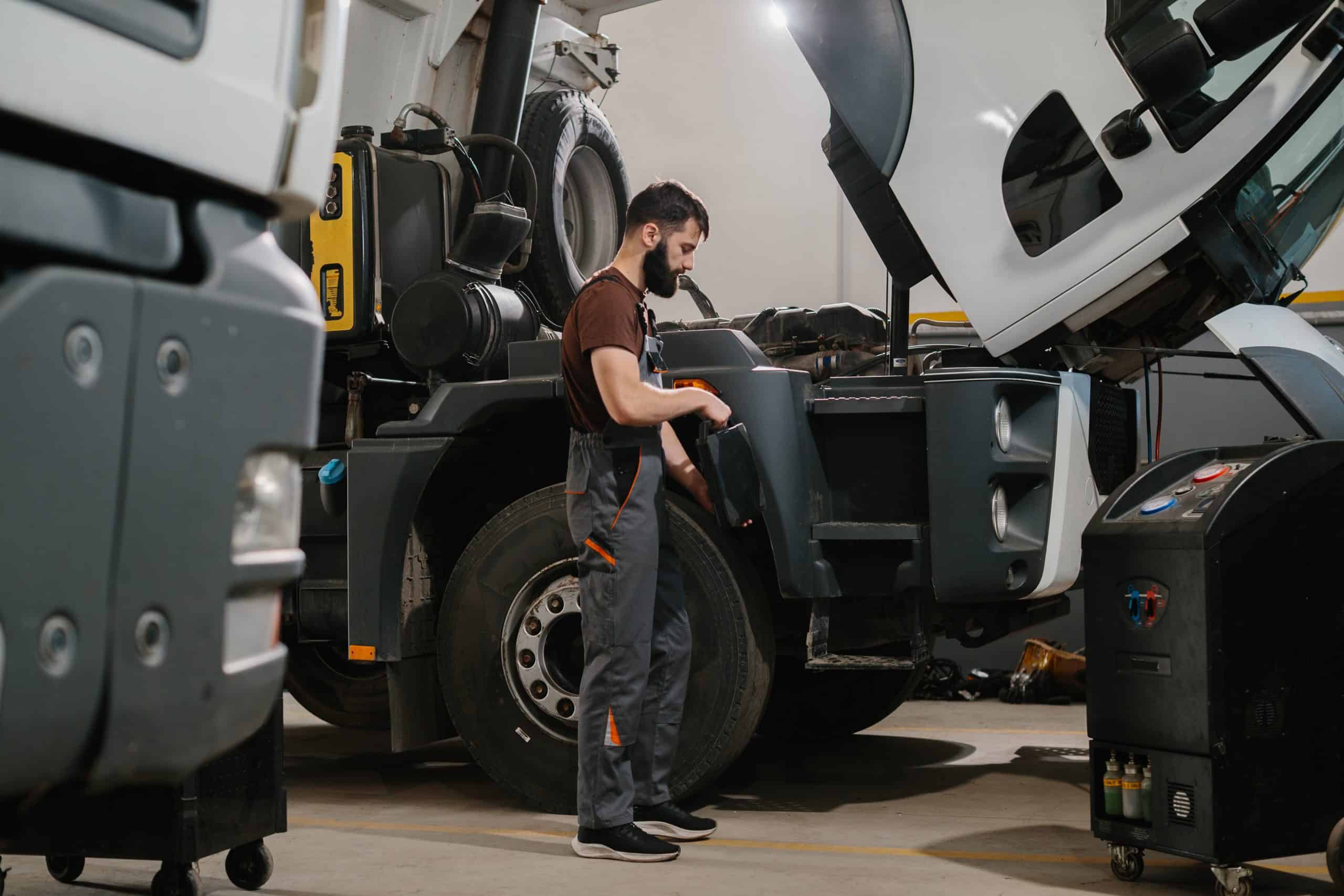
Authorised dealers have direct relationships with manufacturers, access to warranty claim systems and approval processes, genuine parts inventory often already in stock, and factory-trained technicians who’ve completed manufacturer-specific technical training programs. Non-authorised mechanics might be perfectly competent, but they can’t process warranty claims directly through manufacturer systems, which means paying upfront and seeking reimbursement later through paperwork submission. Verify current dealer authorisation status and warranty claim procedures, as these can change.
The operation also runs 24/7 emergency support because mechanical failures can occur anytime. When a warranty issue stops a truck mid-job, someone needs to authorise emergency repairs, arrange alternative transport or towing, or get the truck to the nearest service facility.
Comparing Iveco and Fuso Warranty Coverage
Understanding these warranty structures helps make informed decisions when comparing trucks. Warranty terms change with model years and promotional periods. Always verify current coverage details directly with manufacturers or authorised dealers.
What Iveco Warranties Typically Include
Iveco’s warranty coverage for their Daily (light commercial range) and Eurocargo (medium-duty range) models generally provides comprehensive protection designed specifically for commercial operators. Typical factory coverage includes both the vehicle (comprehensive component coverage) and powertrain (drivetrain-specific protection), though exact periods vary by model year and specific vehicle configuration.
One advantage often associated with Iveco purchases is the inclusion of roadside assistance programs bundled with new vehicle warranties. This typically includes more than just basic towing but may cover emergency repairs, fuel delivery, tyre changes, and accommodation assistance if stranded away from home base overnight. Specific roadside assistance benefits and coverage areas should be confirmed with current program documentation.
Iveco’s powertrain coverage generally extends for longer periods beyond the general vehicle warranty, focusing on engine components, transmission elements, and drivetrain components. These are expensive systems where replacement or major repairs can be costly. Verify specific coverage periods for your intended purchase, as these vary by model and year.
Extended warranty options are often available through authorised Iveco dealers like STM, allowing coverage extension beyond factory terms. The pricing varies based on truck model, intended usage profile, and how much additional coverage is purchased. Extended warranty costs vary significantly. Contact dealers directly for current pricing and coverage options.
Fuso Factory Warranty Structure
Fuso’s approach with their Canter and Fighter series warranties often emphasises reliability through integrated service programs. Their coverage may include maintenance packages or service plans for initial ownership periods. This means scheduled services (oil changes, filter replacements, fluid services, inspections) might be covered as part of the warranty package. Fuso warranty structures and included services vary by model year and region. Verify current offerings with authorised Fuso dealers.
One area where Fuso often provides coverage is diesel particulate filter and emissions system components. Modern emission standards mean these systems are complex with sensors, regeneration processes, selective catalytic reduction systems using AdBlue, and can be costly to repair when faults occur. Specific emissions system coverage should be confirmed in the current warranty documentation.
Fuso warranties are often transferable to subsequent owners, which can enhance truck resale value depending on the remaining coverage duration. The transfer process typically requires notifying Fuso through an authorised dealer, completing transfer paperwork, and potentially paying a transfer fee. Transfer procedures and fees may vary. Verify current requirements with Fuso or authorised dealers.
What Truck Warranties Cover and What They Exclude
This is where warranty confusion can cause financial challenges. Operators sometimes assume coverage for repairs that were never included. Coverage specifics vary by manufacturer, model, and warranty type. Always review complete warranty documentation for your specific vehicle.
Components Typically Covered Under Factory Warranties
Engine and transmission coverage form the core of powertrain protection. This typically covers the engine block, cylinder heads, pistons and connecting rods, crankshaft and main bearings, camshaft and valve train components, timing components, fuel injection systems, turbocharger assembly, transmission case and internal gears, torque converter in automatic transmissions, clutch mechanism in manual transmissions if not classified as a wear item, and drivetrain components like differentials and driveshafts.
Electrical systems and computer components often fall under comprehensive coverage during the bumper-to-bumper period. This typically includes the ECU or engine control unit, body control modules, wiring harnesses throughout the vehicle, alternator, starter motor, sensors throughout the vehicle, instrument cluster and dashboard electronics, and electronic controls for various functions. Electrical repair costs vary widely depending on system complexity and fault location.
Structural components and body panels typically receive coverage against manufacturing defects (problems originating from the manufacturing process rather than damage during operation). The chassis frame, cab structure and mounting points, doors and door mechanisms, hood and associated latches, and load tray or body structure all fall into this category. However, coverage here is specifically for manufacturing defects like welding failures, material defects, or assembly errors, not damage from use, impacts, accidents, overloading beyond GVM specifications, or corrosion in most cases. Manufacturing defect determination requires technical assessment and may be subject to manufacturer evaluation.
Common Exclusions That Catch Truck Owners Off Guard
Wear items represent a substantial exclusion category. Tyres, brake pads and rotors, clutch components in manual transmissions, batteries, wiper blades, air filters, fuel filters, and oil filters all wear out through normal use.
Manufacturers don’t cover replacement because these items have expected service lives that vary based on usage conditions and operating practices. Wear item replacement intervals vary significantly based on operating conditions, load patterns, and maintenance practices. Budget accordingly for these routine expenses.
Glass, lights, and external trim components are typically excluded or have very limited coverage under most warranty terms. Glass and external component damage is often covered by comprehensive insurance rather than manufacturer warranties. Review insurance coverage for these items.
Damage from accidents, misuse, neglect, or modification typically voids coverage for affected components. Overloading trucks beyond GVM specifications, running critically low on oil, or installing aftermarket modifications that stress components means no warranty protection for resulting failures. Operating within manufacturer specifications is essential for maintaining warranty coverage. Modifications may affect warranty eligibility for related systems.
Grey Areas Where Coverage Depends on Circumstances
Weather and environmental damage assessment creates grey areas where coverage decisions can depend on subjective interpretation. If electrical systems corrode prematurely in coastal conditions, determining whether that’s a manufacturing defect (potentially covered) or environmental damage (potentially excluded) requires evaluation. Environmental damage claims require case-by-case evaluation. Document operating conditions and maintenance practices thoroughly.
Intermittent problems that technicians cannot replicate during inspection often delay or complicate warranty claims. Trucks cutting out randomly, losing power intermittently, displaying warning lights sporadically, but running perfectly during workshop testing, create challenges. Intermittent fault claims often require extensive documentation of problem occurrences and conditions. Detailed records significantly improve claim success rates.
The best defence is documenting problems with phone videos showing dashboard warnings or symptoms as they occur, noting specific conditions when faults occur, and being present during diagnostic testing if possible to trigger the issue by replicating those exact conditions.
Damage from third-party accessories or modifications exists in a grey zone with boundaries that aren’t always clear. Installing basic accessories like aluminium toolboxes likely won’t affect coverage. But if aftermarket exhaust systems cause elevated temperatures affecting other components, coverage for those repairs is questionable. Modification’s impact on warranty coverage varies by modification type and affected systems. Consult with dealers before making significant modifications if warranty coverage is a concern.
Keeping Warranty Valid Through Proper Maintenance
Skipping maintenance or failing to document service properly can void warranty coverage, and maintenance documentation issues represent a common reason for claim denials. Individual warranty terms specify exact maintenance requirements. Review warranty documentation carefully to understand specific obligations.
Required Service Schedule That Cannot Be Skipped
Manufacturer-specified service intervals for commercial trucks aren’t suggestions but contractual obligations for maintaining warranty validity. Most commercial vehicles require service at specified intervals, and the “whichever comes first” clause (whether time or kilometres) catches operators who assume they can delay service. Service interval requirements vary by manufacturer, model, and sometimes operating conditions. Verify specific requirements in warranty documentation.
Services generally fall into categories with different scopes. Regular maintenance services typically include oil and filter changes, fluid level checks and top-ups, brake inspections, and basic systems testing. More comprehensive services occur at longer intervals and include additional work like transmission service, coolant replacement, differential service, detailed inspections of various components, and more comprehensive diagnostic testing. Service costs vary significantly by dealer, location, and vehicle type. Obtain quotes from authorised service providers for accurate current pricing.
Skipping scheduled service can void coverage for subsequent failures. Manufacturers interpret service schedules as minimum obligations for maintaining the vehicle in an acceptable condition. Missing services can break the chain of documented maintenance. Complete maintenance records significantly improve warranty claim success rates.
Documentation Required for Every Service
Service book maintenance requirements remain important. Physical service books need stamps, signatures, and date/mileage records from authorised service providers at every service interval. Maintain both physical service books and digital records for redundant documentation.
Receipts and invoices for warranty claim proof should be kept for extended periods. Every service receipt, every maintenance activity, every replacement part needs documentation showing the date, mileage, work performed, parts used with identifiers, and costs. Store these digitally by scanning or photographing receipts before thermal paper fades, and physically as backup.
Create a simple filing system: vehicle identification on the storage, receipts in chronological order, and service books attached. The time invested in organisation is minimal compared to potential warranty claim values.
Digital record-keeping options for small business operators make this process more manageable. Many workshops now email service summaries automatically. Create dedicated storage systems for each vehicle, and file every service document systematically. Alternatively, use vehicle management tools that allow photographing receipts with phones, logging service dates and mileage, and attaching digital copies.
The key is actually using the system consistently. Find the simplest approach that will actually be maintained: whether that’s basic email organisation, dedicated cloud storage with mobile uploads, or vehicle management applications with reminder features.
Choosing Where to Service Trucks Without Voiding Warranty
Operators are not legally required to service trucks exclusively at authorised dealers to maintain warranty coverage. Competition and Consumer regulations specifically protect the right to choose service providers, provided that manufacturer specifications for service procedures, parts quality, and maintenance intervals are met. While choice exists, documentation requirements may be more stringent when using non-authorised service providers.
However, using independent mechanics requires more diligence and documentation discipline. Operators must ensure mechanics use appropriate parts meeting manufacturer specifications, follow manufacturer service procedures, and properly document all work with detailed invoices.
The burden of proof falls on operators to demonstrate that vehicles were maintained correctly if manufacturers question the service history. With authorised dealers, manufacturers generally trust their processes and typically accept their service documentation. Claim processing may be faster and smoother with authorised dealer service records.
For major components affecting critical systems, genuine parts eliminate potential disputes. The decision between genuine and aftermarket parts should consider both immediate cost savings and potential warranty implications.
STM Trucks & Machinery’s workshop availability includes extended hours and weekend operation for maintenance scheduling, reducing disruption to business operations. The Smeaton Grange facility accommodates larger vehicle combinations, so trucks of various sizes and configurations can access service.
Making Successful Warranty Claims When Problems Arise
Despite best maintenance efforts, mechanical issues can occur. Now comes the time when the warranty either proves its value or reveals its limitations. Claim processing varies by manufacturer and specific circumstances. Individual experiences may differ.
Steps to Take When Trucks Develop Problems
Initial diagnosis and problem documentation should start before contacting the dealer. When symptoms begin, document systematically: what’s happening specifically, when it occurs, operating conditions when problems manifest, dashboard warning indicators (photograph them with timestamps), unusual sounds or behaviours (video recordings capture evidence), performance changes.
The more detailed the evidence provided, the easier the diagnosis can become. The quality of problem documentation can significantly impact diagnostic efficiency and claim processing speed.
Dealers typically require complete service history documentation proving warranty-maintaining maintenance, detailed problem descriptions with specific symptoms and conditions, current mileage and operating conditions, and visual documentation like photos or videos of the problem. Having this documentation ready can streamline the process.
For most issues, the dealer is the appropriate first contact point. They process claims through manufacturer systems, have access to service facilities and parts inventory, and can often schedule diagnostics. However, if the dealer is unresponsive, if the location makes contact difficult, or if disputing a denied claim, escalating to the manufacturer’s warranty departments may be necessary.
If a truck breaks down far from authorised service facilities, calling the dealer or manufacturer’s emergency assistance line before authorising repairs at non-authorised facilities is advisable. Emergency repair authorisation procedures vary by manufacturer. Check warranty documentation for specific requirements and contact procedures.
Handling Warranty Claim Rejections or Disputes
Common reasons claims get denied include various factors related to maintenance, usage, or vehicle condition. Understanding specifically why claims get rejected is important for determining whether disputing makes sense. Denial communications should specify exact reasons; if they don’t, requesting a written explanation before proceeding is advisable. Denial reasons vary widely. Each situation requires individual assessment.
Escalation process within manufacturer warranty departments typically follows hierarchical structures. Start with the service advisor at the dealer. They process most claims and often can resolve issues by providing additional documentation or clarification. If they can’t help, escalating to the dealer’s warranty administration is the next step.
If dealer-level escalation doesn’t resolve issues, contacting the manufacturer’s regional warranty representatives may be appropriate. If regional contacts don’t provide a resolution, escalating to national warranty management may be the final manufacturer-level option. Escalation success varies by situation. Not all denials get overturned, but persistent, well-documented appeals sometimes succeed.
Don’t necessarily accept initial denials as final. Requesting escalation to the next level with additional supporting documentation or arguments may be worthwhile. Successful escalation often depends on documentation quality, maintenance record completeness, and the strength of the technical case.
When to involve Australian Consumer Law protections typically comes after manufacturer warranty processes have been attempted or when claims fall outside warranty periods, but failures suggest quality issues. Consumer law claims involve different processes and timelines than manufacturer warranty claims. Legal or consumer advocacy advice may be beneficial for significant disputes.
Getting independent assessments for disputed mechanical failures can strengthen positions. If dealer claims suggest one cause but alternative explanations seem plausible, an independent mechanic’s technical assessment may provide supporting evidence. Independent assessments involve upfront costs with no guarantee they will result in claim approval. Consider the assessment cost versus potential claim value.
Choose assessors carefully: look for mechanics with relevant expertise, recognised qualifications, established reputations, and a willingness to provide detailed written reports with technical explanations. Assessment costs vary by complexity and scope. Obtain quotes before proceeding.
Extended Warranty Options Worth Considering
Sometimes, extended warranties may make financial sense, and sometimes they represent protection that won’t get used. Extended warranty value varies dramatically by individual circumstances. Consider usage patterns, business structure, and risk tolerance carefully.
When Extended Warranties Make Financial Sense
If trucks accumulate significant annual kilometres, factory warranty limits may be reached relatively quickly, leaving periods of operation without protection when component failure risks may increase. High-mileage operators who exceed factory warranty periods quickly might consider extended coverage. Extended warranty costs vary significantly by vehicle type, coverage scope, and duration. Contact dealers for current pricing.
Businesses with constrained cash flow that might struggle with unexpected major repair costs sometimes use extended warranties as budgeting tools. Extended warranty premiums represent known, budgetable costs versus unknown potential expenses. Whether this approach makes sense depends on the individual business’s financial structure, risk tolerance, and ability to absorb unexpected costs.
Trucks used in demanding applications may face different wear patterns than highway trucks with lighter loads. If trucks work considerably harder than average usage patterns, component stress and potential for expensive repairs may differ. The operating environment significantly impacts component longevity. Assess usage patterns realistically when considering extended coverage.
What Extended Coverage Actually Adds to Factory Protection
Additional coverage can be structured in various ways. Some extended warranties add time beyond factory coverage, others add distance beyond factory limits, and comprehensive plans may add both. Extended warranty structures vary by provider. Review specific terms carefully to understand exactly what additional protection is purchased.
Components included in extended plans versus factory warranties should be examined carefully. Some extended warranties mirror comprehensive factory coverage. Others offer powertrain-focused coverage while leaving other systems without extended protection. Budget-tier extended warranties may have more limited coverage than premium options. Read coverage details carefully.
Additional features like rental truck reimbursement during repairs may add value for operators who cannot easily absorb downtime. If an extended warranty includes daily rental reimbursement during covered repairs, that represents meaningful business continuity support. Rental reimbursement provisions vary. Verify specific daily limits and maximum reimbursement periods in extended warranty terms.
How Warranty Coverage Affects True Cost of Ownership
Warranty coverage fundamentally affects operating costs, budgeting predictability, and what the total cost of ownership actually is over extended periods. Individual ownership experiences vary significantly based on usage, maintenance, and specific vehicle reliability.
Calculating Real Financial Protection from Warranty Coverage
Industry experience suggests that commercial truck operators may spend varying amounts annually on unscheduled repairs and component replacements once vehicles exit warranty periods. Costs vary widely based on vehicle type, usage intensity, and operating conditions. Individual experiences range considerably.
Cost distribution is often uneven. Some periods involve minimal unscheduled expenses (just routine maintenance), while other periods may face more significant repairs when components require attention. Repair cost predictability decreases after warranty expiration. Extended warranties or dedicated reserves help manage this uncertainty.
How warranty coverage reduces unexpected expense risk: it converts unpredictable potential repair costs into defined coverage terms. During warranty periods, financial exposure is generally limited to non-covered items (wear components and routine maintenance) while the manufacturer assumes responsibility for defects and premature failures. Warranty value includes both actual repair cost coverage and the budgeting certainty it provides.
Resale Value Impact of Remaining Warranty Coverage
A transferable warranty as a selling advantage can affect what buyers might pay for used trucks. Used trucks with substantial remaining warranty coverage often command premiums over similar trucks without warranty. The premium varies based on remaining coverage duration, coverage comprehensiveness, and buyer priorities. Not all buyers value remaining warranty equally.
Buyers may pay for the reassurance and reduced financial uncertainty that the remaining warranty provides. Warranty remaining can become a negotiation factor.
Certified pre-owned programs leveraging remaining factory coverage can represent options both for buyers seeking lower-risk used purchases and sellers with significant warranty remaining. These programs typically combine the remaining factory warranty with dealer inspection and sometimes additional coverage or services. Certified pre-owned program terms vary by dealer and manufacturer. Verify specific program benefits and requirements.
Documenting warranty status for potential buyers requires providing evidence that coverage remains valid, potentially transferable, and hasn’t been voided. Providing complete service records, warranty documentation showing coverage details, and confirmation from the manufacturer or dealer about warranty status and transferability can support sales negotiations. Transfer procedures vary. Verify current requirements to ensure smooth warranty transfers.
Taking Action on New Truck Warranty Decisions
Understanding warranty coverage before purchasing a truck represents essential business protection. Individual experiences vary. Some operators never file warranty claims, while others rely heavily on coverage.
Key warranty factors start with understanding what’s actually covered versus what assumptions exist. Verify specific warranty terms before finalising purchase agreements, including exact coverage periods, component coverage details, maintenance requirements, and dispute resolution procedures. Warranty terms vary significantly by manufacturer and model. Never assume coverage based on other vehicles or brands.
The importance of choosing dealers with accessible service locations matters for operators where operational continuity is critical. For NSW operators, having service facilities distributed throughout operating areas means warranty repairs might not require extended travel or prolonged business interruptions. Service accessibility varies by location and dealer network.
Remember Australian Consumer Law protections beyond manufacturer warranties. Even after factory coverage expires, statutory rights may exist if failures suggest quality issues or durability shortfalls. Consumer law protections involve legal concepts that may require professional advice for significant disputes. The ACCC and state consumer affairs offices provide information resources.
Maintain comprehensive service records from delivery. Documentation gaps represent common issues in warranty claim challenges. Create systematic approaches immediately: organised storage systems, digital backups, service book maintenance, and regular documentation reviews. Comprehensive documentation significantly strengthens warranty claim positions.
STM Trucks & Machinery’s experience with warranty processes over decades means understanding practical realities. Three NSW locations provide geographic service distribution: Smeaton Grange serving Western Sydney, Liverpool, Camden, and Campbelltown areas; Queanbeyan West covering Canberra region, Southern Highlands, and Goulburn areas; and Unanderra supporting Illawarra, South Coast, and Shoalhaven operators. Service accessibility can meaningfully impact coverage’s practical value.
Beyond warranty processing capability, comprehensive emergency support exists because truck problems can occur anytime. Emergency response capability varies by dealer. Verify available support before assuming services exist.
Whether considering an Iveco Daily, a Fuso Canter, or heavier trucks, understanding warranty coverage before purchase may protect investments. Browse STM’s new truck inventory to compare warranty coverage across different models and manufacturers.
Answers are available for specific questions about current warranty terms, explanations of what coverage means for particular usage patterns, and help in structuring protection packages. Always verify current terms directly, as warranty programs evolve regularly.
Power Your Business with STM Trucks & Machinery
Whatever the size of your business, our experienced sales team will help you get the best from your budget.
This analysis is for informational purposes only and should not be considered vehicle purchasing, financial, or legal advice. Warranty terms, coverage periods, conditions, and costs change frequently across manufacturers and model years and vary by region. Repair costs, component prices, and service rates mentioned are approximate ranges based on historical data and vary significantly by location, dealer, vehicle type, and current market conditions. Regulatory requirements, including Australian Consumer Law interpretation, involve complex legal concepts that may require professional legal advice for specific situations. Statistical claims and industry observations reflect general trends, but individual experiences vary dramatically. Always consult current manufacturer documentation, including complete warranty booklets and technical specifications, review all warranty documents provided with new vehicles carefully before accepting delivery, verify all pricing and coverage details directly with authorised dealer representatives, and consider consulting with legal professionals for significant warranty disputes or consumer law questions before making truck purchasing decisions and signing contracts. For questions about current warranty coverage on Iveco, Fuso, or other brands, contact STM Trucks & Machinery at the nearest NSW location: Smeaton Grange (02) 4648-2220, Queanbeyan West (02) 6162-0440, or Unanderra (02) 4271-3877. Individual results and experiences vary significantly based on maintenance practices, operating conditions, usage patterns, and many other factors.