Buying a commercial truck is one of those decisions that either makes your business run smoother or hands you expensive headaches for the next decade. Most truck guides online read like they were written by someone who has never run a business, dealt with NSW licensing, or spent a summer watching their delivery schedule fall apart because the wrong vehicle couldn’t handle Western Sydney traffic.
Get this wrong, and you’re looking at a $70,000 to $300,000 mistake you’ll be paying off for years, while dealing with a truck that doesn’t fit your needs.
This guide is about the choice, not the spec sheet. How to match a truck to your work, how NSW licensing narrows your options, what ownership actually costs, and how to structure the finance so it doesn’t strangle you in a slow month. If you want the full specs, engine options, and pricing for every model, that lives in our companion reference on IVECO truck models in Australia. Come back here for the decision.
Whether you’re a tradie eyeing your first van, a landscaper needing site access, or a fleet operator adding heavy vehicle capacity, this is practical guidance rather than recycled spec sheets.
Disclaimer: Specifications, pricing, and availability change frequently. All figures are indicative only and based on 2025 data. Verify current information with your local IVECO dealer before purchasing.
Power Your Business with STM Trucks & Machinery
Whatever the size of your business, our experienced sales team will help you get the best from your budget.
The Three Things That Actually Decide It
The right truck matches three factors: your application, your licensing situation, and your financial reality. Optimise for just one and you create problems. A truck that’s perfect for the job but needs a licence you don’t have is an immediate headache. A truck that fits the budget but is undersized for the work is a slow bleed of productivity for years.
So before you fall in love with a model, answer three questions honestly. What do you carry, and how far? What licence do you and your drivers actually hold? And what can the business afford over the entire ownership period, not just the deposit? Everything below works through those three in order.
Why IVECO in the First Place
European engineering gets mentioned in plenty of truck marketing. The real question is whether that engineering suits Australian conditions. IVECO combines European manufacturing standards with a local presence through its Dandenong facility in Melbourne, where vehicles are specified and validated for Australian use.
That’s more than a compliance sticker on a European import. Trucks built for motorways and mild weather need adaptation for our heat, our dust that chews through air filtration, and unsealed roads that stress suspension differently than an autobahn. Euro 6 emissions compliance comes tuned for Australian fuel quality.
On safety, IVECO integrates Advanced Emergency Braking, Adaptive Cruise Control, and Lane Departure Warning across much of the range, with availability varying by model and spec. Cabins run to suspended driver seats on the Daily, pneumatic cab suspension on the heavy-duty trucks, and flat-floor sleeper layouts on the S-Way Active Space cab for interstate work. For a closer look, read our article on what makes IVECO truck cabs stand out.
Start With Licensing, Because It Rules Options In or Out
NSW licensing decides which trucks you can legally run, and getting it wrong creates real problems. Buy something that needs a licence you don’t hold, and you’re facing fines, or limiting which employees can drive your newest asset. Requirements change, so verify with Service NSW before buying.
Car licence (Class C) covers vehicles under 4,500kg GVM. That includes the Daily 35S and some 4,495kg variants. The advantage is huge for a small team: any driver operates any vehicle, no roster juggling based on who holds what.
Light Rigid (LR) covers 4,500 to 8,000kg GVM, and it’s required for the Daily 7-tonne models, including every 4×4 variant. Training runs a few hundred to under a thousand dollars over a day or two. For the extra payload, that’s a minor investment.
Heavy vehicle licences (MR, HR, HC) are required for the upper Eurocargo range, S-Way, T-Way, X-Way, and Trakker, depending on configuration. These aren’t weekend courses. The pathways take months. Then again, making three trips in an undersized truck costs more in fuel, time, and wear than the licensing ever will.
The full licence class for each model is listed on the model’s reference page. The point here is simpler: sort out what you can legally drive first, because it decides which of the next sections even apply to you.
Matching a Truck to the Work You Actually Do
Spec sheets tell you what a truck can do. What they don’t tell you is whether that capability matches how your business runs day to day. The right choice depends on what you’re carrying, where you’re going, and how often.
Tradies and Small Business
A typical electrician carries 220 to 400kg of tools, power equipment, consumables, ladders, and safety gear, plus job-specific materials. The Daily 35S handles that with room to spare, on a car licence. Plenty of dual-cab utes top out around 1,000kg or less in comparable configurations, and they run out of room fast.
The Daily Cab Chassis takes custom service bodies for plumbers, electricians, and general trades, with wheelbases that suit most body builds. The 50C is the sweet spot for a lot of trades: proper truck capability without a licence restriction that shrinks your hiring pool.
One warning. If you’re constantly pushing payload limits, you’re in the wrong class. Running heavy day after day kills the suspension early, wears out brakes fast, voids the warranty, and creates liability exposure. Size up.
Landscaping and Construction
Site access ranges from poor to nonexistent, and you’re moving dense materials. Soil runs roughly 1,500kg per cubic metre, aggregate around 1,600kg. Standard vans and conventional trucks struggle here.
The Daily 4×4 handles light off-road with its three locking differentials, which are good for equipment and small loads on soft or broken ground. For real volumes, a Eurocargo with a tipper body carries 10 tonnes or more. When the work turns to heavy earthmoving support, the T-Way and Trakker take over, with permanent all-wheel drive, reduction hubs, and diff locks for ground where conventional trucks bog.
Courier and Delivery
Urban delivery needs capacity, manoeuvrability, and a drivetrain that survives constant stop-start punishment. Get the balance wrong, and you’re either running multiple trips or fighting an oversized van through CBD streets.
The Daily Van carries substantial loads while staying manoeuvrable in the city. The eight-speed ZF Hi-Matic automatic is the one that transforms city work. A manual in stop-start traffic grinds drivers down by mid-afternoon, and it wears the clutch far faster than the auto.
Freight, Logistics, and Line-Haul
For last-mile, the Daily Van covers it. For metropolitan distribution with 8 to 12 tonne payloads that still needs to reach tight loading docks, the Eurocargo ML140 or ML160 fits. For interstate line-haul, the S-Way 4×2 handles single trailers, and the S-Way 6×4 covers B-double work.
Emergency Services and Government
Rural response leans on the Daily 4×4 for volunteer fire brigades, SES, and remote area work. Medium response and firefighting appliances suit the Eurocargo 4×4. Municipal operations like waste collection, street sweeping, and parks maintenance run the Eurocargo ML140 or ML160.
If you’re stuck between the two most common choices, our guide on choosing between the Daily and Eurocargo breaks down the payload, licensing, and cost differences.
What Ownership Actually Costs
Purchase price gets all the attention, but running costs decide whether a truck makes financial sense over its working life. A cheaper truck with tighter service intervals and shorter component life can easily cost more than a pricier one.
Service intervals are where IVECO earns its keep. Daily models run up to 50,000km or 12-month intervals depending on application, and the heavy-duty range runs longer intervals again. Eurocargo variants with the Tector SCR engine stretch to 80,000km oil changes under the right conditions. For a truck earning revenue, fewer workshop visits means less downtime, not just lower bills.
IVECO’s Elements maintenance program offers fixed-cost servicing over three, four, or five years, which takes the surprise out of budgeting. Indicative Daily pricing has run around $6,300 for three years, $13,050 for four, and $18,850 for five, but confirm current figures with your dealer. That predictability is worth a lot to operators new to commercial trucks who don’t yet have a feel for ongoing costs.
Parts availability matters most when a truck is sitting idle. Authorised dealers hold genuine parts and run delivery across metro and regional areas. For warranty and critical components, stick with genuine parts.
On warranty, the Daily carries 3 years and 250,000km standard, extendable to 5 years and 300,000km. The S-Way starts at 3 years and 750,000km with options to 5 years and 1,000,000km. A 24/7 breakdown support program provides roadside assistance during the warranty period. One catch worth knowing before you buy a 4×4: extended warranties often aren’t available for 4WD vehicles or trucks doing substantial off-highway work, so factor that into your Daily 4×4 or Eurocargo 4×4 decision. Full coverage and exclusions per model are set out on the reference page.
Financing It Without Strangling Cash Flow
Commercial truck finance works differently from a car loan, and the structure affects both cash flow and your tax position. Sort this out before you walk into a dealership, because it puts you in a stronger spot to negotiate. Each structure has different tax treatment, so run it past your accountant before you commit.
A chattel mortgage gives you ownership from day one, with potential GST and depreciation benefits depending on your circumstances. It suits established businesses planning long-term ownership. A finance lease keeps the truck off the balance sheet with potentially deductible payments, which helps cash flow management. Hire purchase works toward ownership through structured payments, with the finance company holding title until the final one, and it usually needs less documentation, which helps a newer business.
Repayments swing widely with loan amount, term, rate, and balloon structure. As a rough example, a five-year term on a $250,000 truck might run $4,500 to $5,500 a month, but that varies a lot, so get quotes specific to your situation. And structure it against your low season, not your peak, so the truck stays affordable in your weakest months.
Here’s an unpopular opinion. Most small business owners spend too long researching specs and nowhere near enough time structuring their finances properly. I’ve watched operators buy a technically perfect truck on terms that choked the business the first slow quarter. Don’t be that operator.
New Versus Used
New trucks aren’t the only sensible option. For many operations, a quality used truck makes better financial sense. A two- to three-year-old prime mover can save $60,000 to $100,000 against new, with plenty of service life left if it’s been maintained.
Buy dealer-backed rather than private. Dealer-used trucks come inspected and serviced, with warranty options. Private sales can hide expensive mechanical problems that a proper inspection would catch. Look for complete service records, single-owner history where you can get it, and a light-duty background rather than a truck that’s been flogged. Someone else has already absorbed the steepest first-year depreciation.
Taking the Next Step
Bring it back to the three factors. Application, licensing, financial reality. Get all three lined up and the shortlist almost writes itself.
Tradies and small business owners usually find the Daily Van or Cab Chassis under 4.5 tonnes handles most work on a car licence. Landscapers and construction operators needing site access should look at the Daily 4×4 or Eurocargo, depending on payload. Courier operations do best with the Daily Van and the Hi-Matic automatic. Heavy transport, construction logistics, and mining support call for the S-Way, T-Way, or Trakker with the right HR or HC licence.
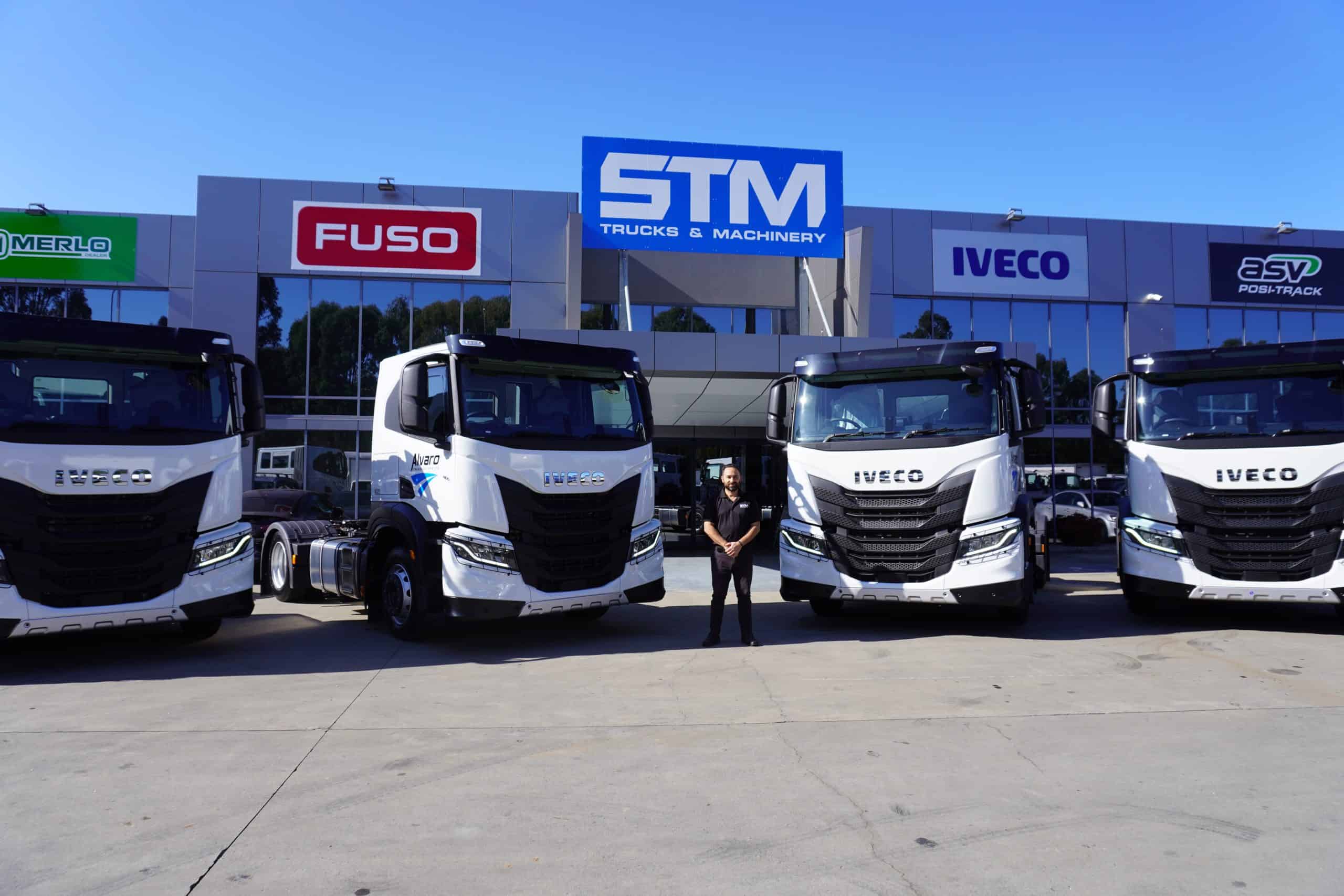
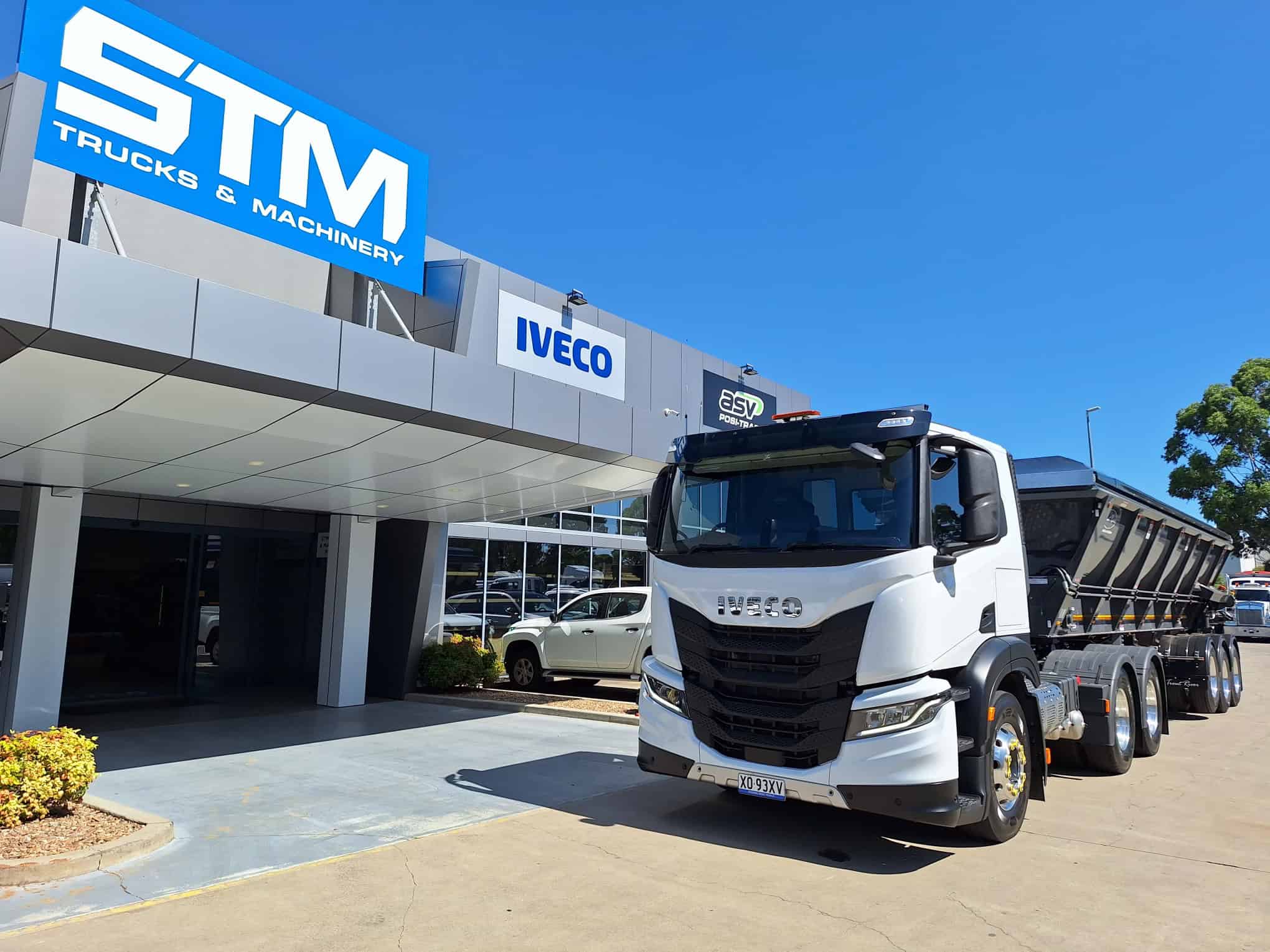
Good dealer guidance prevents expensive mistakes. STM Trucks & Machinery runs three NSW locations with workshops open six days a week, plus 24/7 emergency support, and an in-house finance brokerage that will come to you. Bring your typical load weights, your usual routes, and an honest budget. A conversation costs nothing and might save you from a decision you’d regret.
This guide is for informational purposes only and does not constitute financial, legal, or professional advice. Specifications, pricing, regulations, and availability change frequently. Consult an authorised IVECO dealer, a qualified financial advisor, and the relevant licensing authorities for current information specific to your needs.